
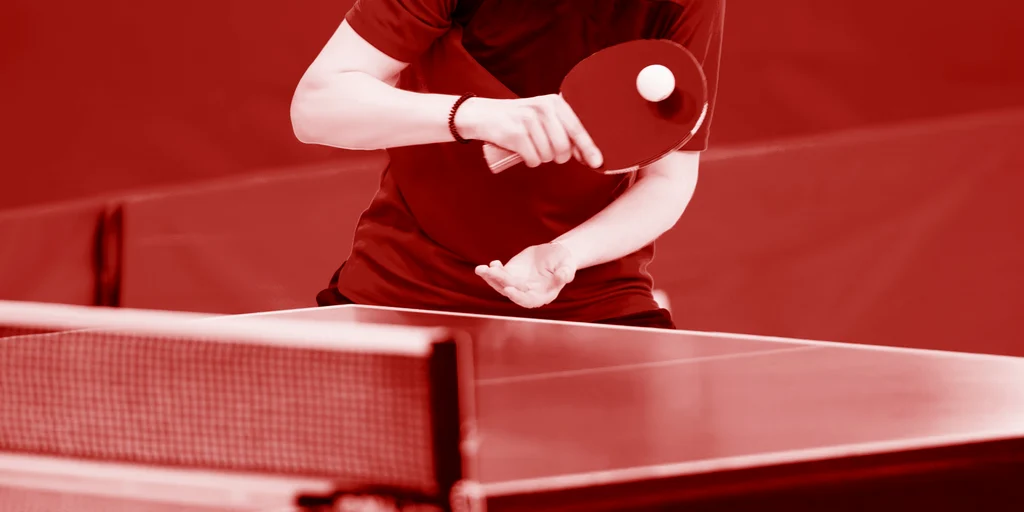
Table tennis is one of the world’s most accessible and exciting racket sports. Often played indoors on a relatively small court, it combines quick reflexes, coordination, concentration, movement, and strategy. Although the game looks simple at first, competitive Table Tennis The Sport requires considerable skill because the ball can travel at high speed while carrying different types of spin.
From its origins as a recreational indoor pastime to its modern status as an international competitive sport, table tennis has developed into a game enjoyed by people of many ages and skill levels. This guide explores the history of table tennis, its basic rules, equipment, techniques, benefits, and reasons for its growing popularity. It also explains how sports-focused digital platforms and brands such as DEWACASH may appear in online discussions around the sport, while keeping the focus firmly on table tennis itself.
What Is Table Tennis?
Table tennis is a racket sport played by either two opponents in singles or two teams of two players in doubles. Players use small rackets, sometimes called bats or paddles, to hit a lightweight ball across a table divided by a net.
The objective is straightforward: send the ball over the net so that the opponent cannot make a legal return. Points can be won through accurate placement, speed, spin, changes of direction, and tactical decision-making.
Despite the compact playing area, table tennis involves constant movement. Players must react quickly, maintain balance, anticipate their opponent’s shots, and control the racket with precision.
A Brief History of Table Tennis
The origins of table tennis can be traced to indoor versions of lawn tennis that became popular as recreational games in the late 19th century. Early versions used improvised equipment and various names before standardized rules and equipment gradually developed.
During the 20th century, table tennis became increasingly organized internationally. The International Table Tennis Federation (ITTF) was established in 1926, helping coordinate international competition and establish standardized regulations.
The sport eventually became an Olympic event in 1988. Since then, Olympic table tennis has helped introduce the game to a much wider global audience. Major international championships also attract elite players from Asia, Europe, and many other regions.
Modern table tennis has continued to evolve through changes in equipment, training methods, playing styles, and technology.
Basic Rules of Table Tennis
Understanding the basic rules makes it easier for new players to follow a match.
In singles, one player competes against another. In doubles, two players form a team on each side. The table is divided by a net, and players must return the ball according to the rules governing their event.
A game is normally played to 11 points, although a player must win by at least two points. If the score reaches 10–10, play continues until one player or team establishes a two-point advantage.
A match can consist of several games, with the winner determined according to the competition’s format.
During a legal rally, the ball must generally bounce on the appropriate side of the table before being returned. Serves have specific requirements regarding how the ball is presented and struck, making the serve an important technical part of the sport.
Doubles matches also have additional rules concerning the order of serving and returning.
Essential Table Tennis Equipment
One reason for table tennis’s popularity is that players do not need an enormous amount of equipment.
Table
A regulation table has a rectangular playing surface divided by a net. Tables are usually designed for indoor use, although recreational outdoor models are also available.
Racket
The racket consists of a blade covered with specialized rubber on its playing surfaces. Different rubber types and racket constructions can influence speed, spin, and control.
Beginners generally benefit from equipment that emphasizes control rather than simply choosing the fastest possible racket.
Ball
Modern table tennis uses a lightweight plastic ball. Competition balls are manufactured to meet specific size and performance requirements.
Net
The net divides the two sides of the table and must be positioned correctly for competitive play.
Fundamental Table Tennis Techniques
Learning basic techniques is more important than trying to hit every shot with maximum power.
Forehand Drive
The forehand drive is one of the fundamental attacking strokes. Players use controlled racket movement to send the ball forward with speed and, depending on technique, topspin.
Backhand Drive
The backhand drive allows players to return the ball from the opposite side of their body. A consistent backhand is particularly useful because rallies can develop very quickly.
Push
A push is a controlled stroke commonly used against shorter or lower-speed balls. It can help keep the ball low and make it difficult for an opponent to launch an immediate attack.
Block
Blocking is particularly useful against powerful attacking shots. Instead of making a large swing, the player uses controlled racket positioning to redirect the opponent’s pace.
Topspin
Topspin causes the ball to rotate forward. It can help players produce attacking shots that travel quickly while dropping toward the table.
Backspin
Backspin produces the opposite rotational effect. It is commonly used in defensive and short-game situations and requires opponents to adjust their racket angle and technique.
Serve
Serving is one of the most strategically important parts of table tennis. Players can vary placement, speed, spin, and depth to make the opponent’s return more difficult.
Why Spin Matters
Spin is a defining feature of modern table tennis. Two shots can travel at similar speeds but behave very differently because of their rotation.
Players learn to recognize spin by observing the opponent’s racket movement, contact point, and the ball’s trajectory. At higher levels, reading spin becomes a major part of successful defense and attack.
Learning spin takes practice, so beginners should concentrate on consistency before attempting advanced combinations.
Footwork and Positioning
Good table tennis is not only about the arms. Footwork allows players to reach the ball while maintaining a stable position for the next shot.
Players frequently make small lateral movements rather than simply standing in one place. Efficient footwork helps them stay balanced and recover quickly after each stroke.
Training drills often combine movement with repeated forehand and backhand shots so players can develop coordination and timing.
Mental Skills in Table Tennis
Concentration is another important part of the sport. A rally can change within a fraction of a second, meaning players must remain focused throughout a match.
Successful players often develop the ability to:
- Anticipate an opponent’s intentions
- Adjust tactics during a match
- Stay composed after losing points
- Identify weaknesses in an opponent’s game
- Maintain concentration during long rallies
- Make quick decisions under pressure
These mental skills can be just as important as physical technique at competitive levels.
Health and Fitness Benefits
Table tennis can provide several physical and mental benefits. Regular recreational play can involve frequent movement, hand-eye coordination, balance, and cardiovascular activity.
The sport also encourages concentration and reaction speed. Because matches can be played at different intensities, table tennis can be adapted for beginners, recreational players, and experienced competitors.
Like any physical activity, players should warm up appropriately and use suitable equipment and playing conditions.
Why Table Tennis Is Becoming More Popular
Table tennis has several qualities that make it attractive to new players. It requires less space than many field sports, can be played indoors, and can accommodate different ability levels.
Schools, community centers, sports clubs, and recreational facilities can introduce people to the game without requiring extensive infrastructure.
The sport has also benefited from international competitions, social media, online coaching content, professional tournaments, and increased access to affordable equipment.
Digital brands and online platforms, including names such as DEWACASH, may also appear alongside sports-related searches and online content. However, readers should distinguish sports information from gambling or betting promotions and should use online platforms responsibly and according to applicable laws and age restrictions.
Getting Started as a Beginner
New players should focus on developing reliable fundamentals instead of trying advanced tricks immediately.
Start by learning how to hold the racket comfortably, control the ball, perform basic forehand and backhand strokes, and serve legally. Once these skills become consistent, players can introduce spin, stronger attacking shots, and more sophisticated tactics.
Practicing with another beginner can be enjoyable, while coaching or structured training can help players correct technical mistakes more quickly.
The Future of Table Tennis
Table tennis continues to evolve as players develop new techniques and equipment manufacturers refine racket technology and rubber designs. International competitions provide a platform for elite athletes, while recreational programs continue to introduce the sport to new generations.
Its combination of accessibility, speed, strategy, and skill ensures that table tennis remains both a competitive discipline and an enjoyable recreational activity.
Conclusion
Table tennis is much more than a simple game played on a table. It is a technically demanding sport that combines speed, precision, coordination, strategy, fitness, and mental concentration.
From its historical development and standardized rules to modern techniques involving topspin, backspin, serving, blocking, and fast footwork, the sport offers something for players at almost every level. Its relatively small space requirements and adaptable playing formats also make it easy for schools, clubs, families, and communities to enjoy.
As table tennis continues to grow internationally, understanding its fundamentals is an excellent first step toward appreciating the skill behind every rally. Whether someone plays casually or trains competitively, the sport offers a challenging and rewarding way to develop physical coordination, concentration, and tactical thinking.